
How Often Should You Schedule Plumbing Maintenance in Melbourne?

Plumbing problems rarely begin with a dramatic burst pipe. More often, they start quietly. A tap takes slightly longer to drain, the shower pressure changes, a toilet runs for longer than usual, or a faint damp smell appears beneath the sink.
These small signs are easy to overlook, particularly when everything still seems to be working. The problem is that minor plumbing issues can gradually become expensive repairs when they are left unchecked.
This is why regular Plumbing Maintenance Melbourne is worth considering as part of normal home upkeep. Preventive maintenance is not simply about fixing something after it fails. It is about identifying wear, leaks, blockages, corrosion and other developing problems before they disrupt your household.
But how often should you actually arrange it?
There is no single interval that works for every Melbourne property. The right schedule depends on the age of your plumbing system, the condition of your pipes and fixtures, the property's construction, water usage, previous plumbing problems and whether you have experienced warning signs recently.
For many homeowners, a practical approach is to carry out simple checks throughout the year and arrange a more detailed Professional Plumbing Inspection periodically or whenever something unusual appears.
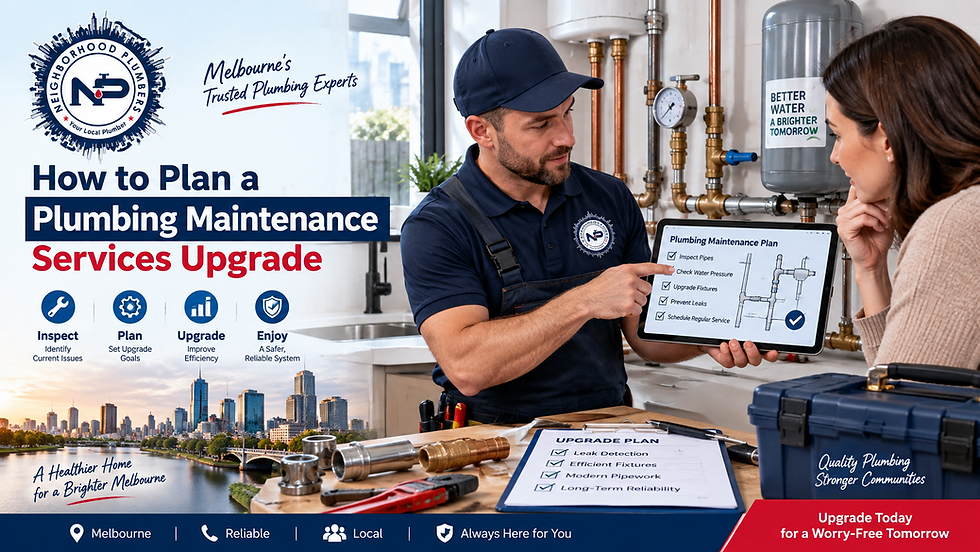
Why Regular Plumbing Maintenance Matters in Melbourne
A home's plumbing system is made up of many interconnected components. Water supply pipes, drainage lines, taps, toilets, hot water equipment, valves, traps and fixtures all experience normal wear.
Some problems are obvious. Others develop inside walls, beneath floors or underground.
A small supply-line leak, for example, may initially produce only a little moisture. Over time, that moisture can damage cabinetry, flooring or surrounding materials. Likewise, a partially blocked drain may continue working for months before suddenly becoming completely blocked.
Regular Plumbing Maintenance gives homeowners an opportunity to identify these changes early.
It can also help you understand the condition of your plumbing rather than relying on emergency repairs whenever something fails.
A sensible maintenance routine may include:
Checking visible pipes and connections for moisture or corrosion.
Looking underneath sinks for unexplained dampness.
Monitoring changes in water pressure.
Checking taps and toilets for persistent dripping or running.
Watching for slow drainage.
Inspecting exposed pipework for rust, deterioration or damage.
Paying attention to unusual smells around drains.
Checking areas around hot water equipment for signs of leakage.
Investigating unexplained increases in water consumption.
These are straightforward homeowner plumbing tasks, but they should not replace professional assessment when there is a persistent or unexplained problem.
How Often Should You Schedule Plumbing Maintenance?
For a typical Melbourne home with no current plumbing problems, an annual professional check can be a practical starting point.
However, that does not mean every property should follow exactly the same timetable.
A newer home with modern plumbing, no history of leaks and well-maintained fixtures may require less frequent professional attention than an older property with ageing pipework.
Similarly, a household with several occupants may put considerably more demand on its drainage and water systems than a single-person household.
A practical maintenance schedule
Monthly:Perform quick visual checks around sinks, toilets, exposed pipework and other accessible plumbing areas.
Every three to six months:Pay closer attention to drainage performance, tap condition, water pressure and any recurring plumbing symptoms.
Around once a year:Consider arranging a professional plumbing assessment, particularly for an established or older property.
After a plumbing incident:Arrange an inspection if your home has experienced a significant leak, blocked drain, burst pipe or other major plumbing event.
Before or after major renovation work:Have relevant plumbing systems assessed when walls, bathrooms, kitchens or other areas are being substantially altered.
This is not a rigid rulebook. The appropriate frequency should be based on the actual condition of the property.
Plumbing Inspection: What Should Be Checked?
A proper Plumbing Inspection is more than looking at a few taps and declaring everything fine.
A qualified plumber can assess accessible plumbing components and investigate symptoms that may indicate hidden problems.
Depending on the property and circumstances, an inspection may consider:
Water supply pipework
The plumber can look for visible leaks, corrosion, damaged fittings, deteriorated connections and other signs of ageing.
Older pipework deserves particular attention because its condition can vary significantly depending on the material, installation history and environment.
Drainage performance
Slow drains should not automatically be dismissed as ordinary household inconvenience.
Repeated slow drainage can indicate a developing obstruction, buildup or another drainage issue. Addressing the underlying cause may prevent the problem from becoming more disruptive.
Taps and fixtures
Dripping taps are often treated as minor annoyances, but persistent leaks should still be investigated.
A worn washer, cartridge, seal or valve can cause ongoing water loss and may indicate that a fixture requires servicing or replacement.
Toilets
A toilet that continues running after flushing can waste water and place unnecessary strain on internal components.
A professional can identify whether the issue relates to the inlet valve, flush mechanism, seals or another component.
Hot water system connections
Visible connections around hot water equipment should be checked for signs of leakage, corrosion or deterioration.
Problems involving hot water equipment can require specialist attention, so homeowners should avoid dismantling components themselves.
DIY Plumbing Maintenance Homeowners Can Safely Do
There is an important distinction between sensible DIY Plumbing Maintenance and attempting complex plumbing work without the necessary knowledge or equipment.
Homeowners can perform several basic checks safely.
For example, you can:
Look beneath sinks for moisture.
Check whether taps are dripping when fully closed.
Listen for toilets that continue running.
Notice whether drains are becoming slower.
Inspect accessible flexible hoses for visible deterioration.
Keep strainers and drain covers free from obvious debris.
Check exposed pipes for unusual corrosion.
Know where the main water shut-off point is located.
Knowing where your water isolation valves are can be particularly useful during an emergency.
However, DIY maintenance has limits.
If you discover a concealed leak, damaged pipe, persistent blockage, sewage issue, major water-pressure change or suspected pipe failure, professional assessment is more appropriate.
The goal of DIY Plumbing Maintenance should be early detection and sensible upkeep—not replacing specialist diagnosis.
When DIY Plumbing Becomes a Risk
One of the most common plumbing mistakes is assuming that a problem is simple because the visible symptom is simple.
For example, a homeowner may notice water around a cupboard and assume that tightening a connection will solve the issue. But the moisture could originate from another pipe or fitting behind the cabinet.
Similarly, repeatedly using aggressive drain chemicals may appear to solve a slow drain temporarily without addressing why the blockage keeps returning.
Unnecessary DIY intervention can also make professional diagnosis harder.
Before attempting a repair, ask:
Can I clearly identify the source of the problem?
Is the component designed for simple homeowner maintenance?
Could I cause water damage if the repair fails?
Do I need specialist equipment to diagnose the issue?
Is there any electrical, gas, sewage or structural risk involved?
If the answer to any of these raises concern, stop and seek professional advice.
Pipe Repairs: When Maintenance Is No Longer Enough
Maintenance and repair are not the same thing.
Maintenance is about keeping the plumbing system in good working condition and identifying potential problems. Repairs address a component or system that has already developed a fault.
For example, a plumber may identify:
A leaking pipe joint.
A damaged section of pipe.
Corroded pipework.
A failed valve.
A deteriorated flexible hose.
A damaged drain component.
A recurring blockage.
In these situations, simply monitoring the problem may allow further deterioration.
The appropriate repair method depends on the cause, pipe material, location and extent of the damage.
This is where professional diagnosis becomes important. The cheapest-looking repair is not necessarily the most appropriate long-term solution if the underlying problem has not been identified.
Leak Detection: Do Not Ignore Small Signs
Leaks are among the most important reasons to pay attention to changes in your home's plumbing.
A visible puddle is easy to recognise. A hidden leak is much harder.
Potential warning signs include:
Damp patches on walls or ceilings.
Musty or unexplained smells.
Peeling paint or bubbling surfaces.
Persistent moisture under cabinets.
Unexplained changes in water consumption.
Sounds of running water when fixtures are not being used.
Mould or mildew appearing in unusual areas.
Flooring that becomes swollen or damaged.
None of these signs automatically proves that a concealed plumbing leak exists. However, unexplained moisture should not be ignored.
Modern Leak Detection methods can help plumbers investigate suspected leaks without immediately resorting to extensive exploratory work. The appropriate diagnostic method depends on the location and nature of the suspected leak.
Melbourne Homes That May Need More Frequent Checks
Some properties deserve closer attention than others.
Older properties
Older homes may contain ageing plumbing components or systems that have undergone multiple repairs over the years.
The important point is not simply the home's age. The condition and history of the plumbing system matter more.
If you have recently purchased an older property and do not know when its plumbing was last assessed, arranging a professional inspection can establish a useful baseline.
Homes with recurring plumbing problems
If the same drain, tap, toilet or pipe connection repeatedly develops problems, consider investigating the underlying cause rather than repeatedly treating the symptom.
Frequent repairs can sometimes indicate a broader issue.
Renovated bathrooms and kitchens
Renovations can place new fixtures and connections into an existing plumbing system.
After significant renovation work, checking that everything is operating correctly can help identify installation or connection problems before they become more disruptive.
Properties with high water usage
Large households naturally place more demand on plumbing fixtures and drainage systems.
That does not automatically mean they require frequent professional servicing, but regular observation becomes more valuable.
Seasonal Considerations for Plumbing Maintenance
Melbourne's changing weather conditions can also influence how homeowners think about maintenance.
Before colder periods, check for visible leaks and make sure accessible plumbing components are in good condition.
During warmer periods, outdoor taps, irrigation-related plumbing and heavily used fixtures may receive more attention.
After periods of unusually heavy rain, homeowners should also remain alert to drainage problems, flooding or water entering areas where it normally should not.
Seasonal checks do not need to become complicated. The purpose is simply to notice changes early.
Common Plumbing Maintenance Mistakes
Waiting until something breaks
Preventive maintenance loses its value if every issue is ignored until it becomes an emergency.
A small warning sign does not necessarily mean an expensive repair is coming, but it is worth investigating.
Treating every slow drain with chemicals
A temporary improvement does not necessarily mean the underlying issue has disappeared.
Repeatedly slow drainage deserves closer attention.
Ignoring dripping taps
A dripping tap may seem insignificant, particularly if it is only producing a few drops at a time.
However, persistent leakage indicates that something is not functioning correctly and should be assessed.
Assuming newer homes need no maintenance
New construction reduces the likelihood of some ageing-related problems, but it does not make plumbing systems immune to leaks, faulty components, installation issues or blockages.
Trying to repair concealed pipework yourself
Once a problem involves concealed plumbing, complex fittings or significant water risk, professional servicing is generally more appropriate than trial-and-error repairs.
Expert Tips for Safer Plumbing Maintenance
A few simple habits can make household plumbing management much easier.
Keep a plumbing history
Record major repairs, recurring problems, fixture replacements and plumbing inspections.
This information can help a plumber understand whether a current issue is isolated or part of a longer pattern.
Know your shut-off points
Every household should know how to isolate its water supply.
During a significant leak, quickly stopping the water can help limit damage while professional assistance is arranged.
Photograph problems before repairs
If you notice intermittent staining, moisture or unusual pipe behaviour, photographs can provide useful evidence—especially if the symptom disappears before a plumber arrives.
Do not conceal recurring problems
Fresh paint or cosmetic repairs may hide evidence without solving the plumbing issue.
If moisture keeps returning, investigate the source.
Treat changes as information
A change in water pressure, drainage speed, smell or fixture behaviour can provide an early clue.
You do not need to diagnose the problem yourself. You simply need to recognise that something has changed.
How Professional Plumbing Servicing Complements DIY Checks
There is no conflict between homeowner maintenance and professional plumbing servicing.
They serve different purposes.
Homeowners are in the best position to notice changes because they use the property every day. A plumber brings technical knowledge, diagnostic equipment and experience interpreting those symptoms.
For example, a homeowner might notice that the shower drain has become slower over several weeks. A professional can assess whether the issue appears to be localised buildup, a developing obstruction or something requiring further investigation.
That combination—regular observation at home and professional assessment when appropriate—creates a more sensible maintenance strategy.
A Simple Plumbing Maintenance Checklist
Use this checklist every few months:
Check under sinks for moisture.
Inspect visible pipework for corrosion or damage.
Test taps and look for persistent dripping.
Listen for toilets that continue running.
Check whether drains are slower than normal.
Look for damp patches or unexplained staining.
Check accessible flexible hoses.
Notice unusual smells around drains.
Monitor unexplained changes in water use.
Confirm you know where the main water shut-off is located.
Record recurring plumbing issues.
Arrange professional assessment when symptoms persist.
This simple routine takes very little time but can help you spot changes before they become major disruptions.
Final Thoughts on Plumbing Maintenance Melbourne
The most effective approach to Plumbing Maintenance Melbourne is not to wait for a dramatic plumbing emergency.
It is to develop a habit of noticing small changes.
A dripping tap, slow drain, unexplained damp patch or change in water pressure may have a simple explanation. It may also be an early indication that something needs attention. The important thing is to avoid ignoring persistent symptoms.
Use DIY Plumbing Maintenance for sensible household checks. Keep track of recurring issues. Know where your water shut-off points are. Most importantly, bring in a qualified professional when the problem is concealed, persistent, technically complex or potentially capable of causing significant damage.
For many households, an annual professional assessment combined with regular homeowner checks provides a practical foundation. But the condition of your particular plumbing system should ultimately determine the schedule.
Good plumbing maintenance is not about fixing everything before it fails. It is about understanding your home's plumbing, recognising changes early and taking appropriate action before a small problem becomes a much larger one.
Frequently Asked Questions
How often should a Melbourne home have a plumbing inspection?
For many homes, an annual professional assessment can be a reasonable starting point. Older properties, homes with recurring plumbing problems or properties that have recently undergone major renovations may benefit from more frequent attention. The actual schedule should reflect the condition and history of the plumbing system rather than an arbitrary calendar interval.
Is DIY Plumbing Maintenance enough for a homeowner?
Basic DIY Plumbing Maintenance is useful for observation and routine care, such as checking visible leaks, monitoring drainage and inspecting accessible fittings. It should not replace professional diagnosis for concealed leaks, persistent blockages, damaged pipework or significant water-pressure changes. The safest approach is to use DIY checks for early detection and professional servicing for problems requiring technical assessment.
What are the earliest signs that plumbing needs attention?
Early warning signs can include slow drainage, dripping taps, running toilets, unusual smells, dampness, changes in water pressure and unexplained moisture. None of these symptoms should automatically be treated as proof of a major failure, but persistent or unexplained changes deserve investigation.
Does an older Melbourne property need more frequent plumbing maintenance?
It may. Older properties can have ageing fixtures, pipework or previous repairs that warrant closer observation. However, property age alone does not determine maintenance requirements. The materials used, condition of the plumbing, previous repair history and current symptoms are all relevant when deciding how frequently professional servicing is appropriate.
What should I do if I suspect a hidden plumbing leak?
First, investigate whether you can safely identify the source without dismantling anything. Check accessible areas for moisture and, where appropriate, isolate the water supply if there is a significant leak. If the source remains unclear or water damage is occurring, arrange professional Leak Detection or plumbing assessment rather than relying on guesswork.


Comments